Subscribe to our newsletter

Do you enjoy reading our newsletter? Consider joining our mailing list, and we will send you our monthly newsletter straight to your inbox.

Excuses, Excuses: Why People Don’t Make Wills, And Why You Must

by | Wills and Estate Planning

“All that lives must die, passing through nature to eternity.” (William Shakespeare, in Hamlet)

Master’s Office records suggest that less than a third of us leave behind a will when we die. That’s astonishing, given the fact that death is one of the few absolute certainties in our lives.

Why do so many of us put our families at risk like this?

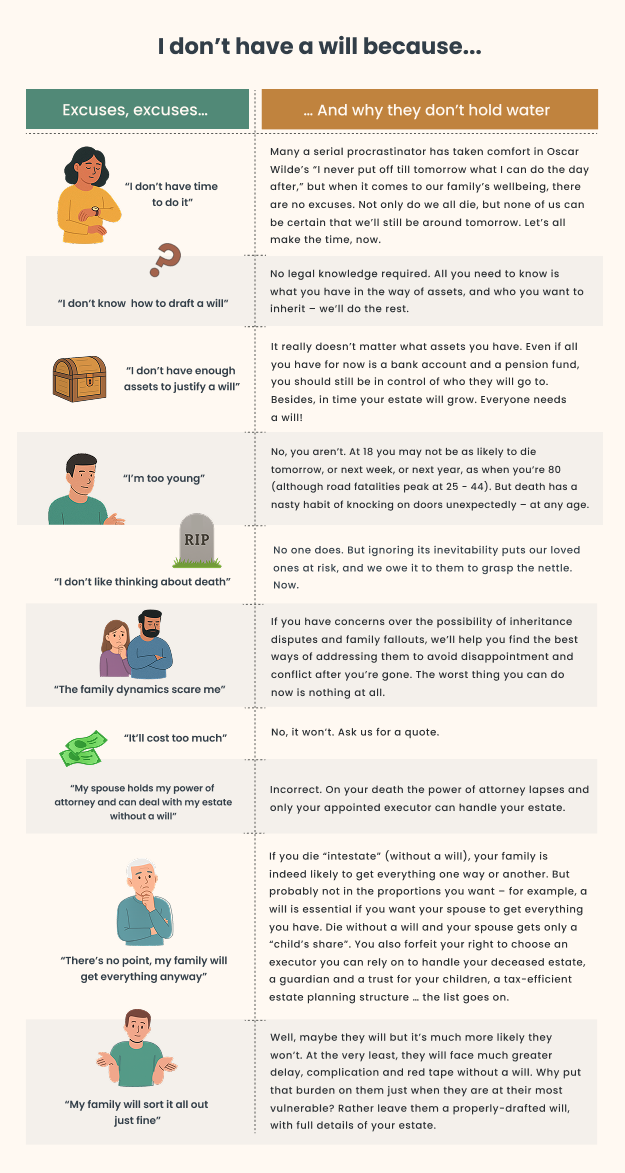
“I don’t have a will because…”

It’s easy to find excuses for doing nothing about a will, with surveys conducted both locally and overseas suggesting that people’s failure to act is normally rooted in one or more of these common excuses:
We’ll help you structure a will and estate plan that honour your last wishes and provide proper protection for your loved ones. 

Disclaimer: The information provided herein should not be used or relied on as professional advice. No liability can be accepted for any errors or omissions nor for any loss or damage arising from reliance upon any information herein. Always contact us for specific and detailed advice.

© LawDotNews

More Articles

One Bad Letter and Your Eviction Falls Apart

One Bad Letter and Your Eviction Falls Apart

A tenant may be in clear breach of a lease, but that does not guarantee a successful eviction. A recent High Court judgment shows how an unclear cancellation notice and a failure to follow the correct legal process can derail an otherwise strong case, leaving landlords with an expensive lesson in the importance of getting the basics right.

Dementia in the Family? Here Are Your Legal Options

Dementia in the Family? Here Are Your Legal Options

A dementia diagnosis affects far more than memory. As mental capacity declines, families are often confronted with difficult legal and financial decisions. Many are surprised to learn that a Power of Attorney may no longer be valid. Understanding the alternatives can help protect a loved one’s affairs before a crisis develops. Read on for the low-down.

How to Protect Your Company from Unlawful Springboarding

How to Protect Your Company from Unlawful Springboarding

Your top employee resigns and immediately opens up a new business in direct opposition to you. Using your software, your client relationships and your business methods to springboard their new start-up and poach your clients. We discuss, in the context of a recent High Court case, how our law can help you put a stop to that sort of unfair competition. And we share some tips on how to protect yourself from it in the future.